Saturday in Tuscaloosa Runs on Points and Parlays Now
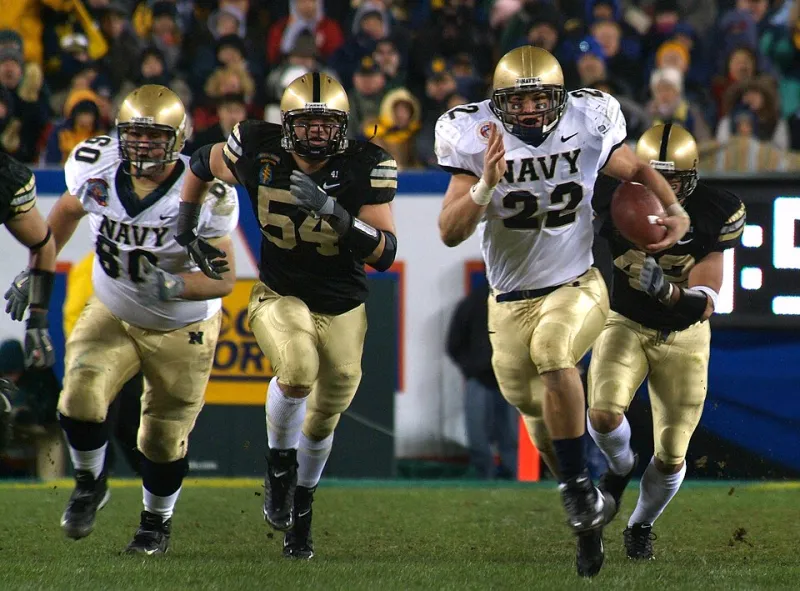
Photo: U.S. Navy photo by Chief Photographer's Mate Johnny Bivera., Public domain, via Wikimedia Commons
Walk down the Strip in Tuscaloosa about four hours before kickoff and you'll notice something your dad's game-day photos never showed: phones out, odds up, and a whole lot of people checking the first-half spread like it's the weather report.
College football Saturday hasn't changed on the field. It's changed in the parking lot, the bar, and the group chat. And the towns that live and die by their teams are the ones feeling it most.
From Tailgate Tent to Sportsbook Window
For most of the last century, betting on college football meant either a friendly squabble or a phone call to a guy who knew a guy. Legal sportsbooks steered clear of campus towns almost entirely — the fear of NCAA blowback was simply too expensive.
That's over. Since the Supreme Court cleared the way for state-run sports betting in 2018, the map has filled in fast. Alabama doesn't have legal mobile betting yet, which just means Crimson Tide fans in Tuscaloosa drive the action to neighboring states or hop the border on apps with looser geography. Louisiana, meanwhile, embraced it fully — Baton Rouge sportsbooks are packed from noon to the last SEC night game whistle. Michigan legalized online betting in 2021, and Ann Arbor is about as plugged-in as a college town gets.
The result is a strange new hybrid: a town whose entire cultural calendar is built around amateur athletics, now wired directly into a professional-grade gambling economy.
The Bar Is the Book Now
Ask any longtime bartender in a college town what's changed and you'll get the same answer in three different accents. The games on TV multiplied. Every screen that used to show one matchup now shows six, each with a scrolling ticker of odds underneath.
Game-day rituals have absorbed betting without much ceremony. The same folks who've been doing the same pregame routine for twenty years now have a same-game parlay running alongside their brats and lawn games. Students line-conference their bets with their brunch reservations. Alumni donors — the same people writing checks to the athletic department — are checking second-half totals on their phones between the fight song and the kickoff.
It's not a seedy undercurrent anymore. It's furniture.
What the NCAA Isn't Saying
Here's where things get uncomfortable. The NCAA has spent years warning about the risks of widespread college sports betting — harassment of student-athletes, integrity concerns, the mental health toll of getting DMs from strangers about a missed cover. League officials have called it one of the biggest threats facing college athletics.
And yet the money keeps flowing, much of it wagered on the very athletes the NCAA insists are amateurs. In states like Michigan and Louisiana, betting on in-state college teams is legal. In others, it's restricted. There's no unified stance — just a patchwork that shifts every time you cross a state line, which is roughly how the whole American gambling map has always worked.
The athletes themselves are caught in the middle. They can't bet on their own sports, but their classmates can bet on them. Their box scores now have financial consequences for thousands of people, some of whom have no qualms about letting a nineteen-year-old linebacker know about it.
The Local Economy Gets a New Line Item
City officials in college towns aren't exactly complaining. Game day already pumped millions into local economies — restaurants, hotels, parking, the works. Betting adds a layer on top: sportsbook lounges, betting-adjacent sponsorships, and bars that suddenly have a reason to keep customers around for the early window and the late game.
In Baton Rouge, sportsbooks near Tiger Stadium do their best business on hours that used to be dead time — the gap between the morning tailgate and the night kickoff. In Ann Arbor, sportsbook lounges have become part of the winter calendar too, keeping basketball fans engaged through the long Michigan cold stretch.
Whether you think that's progress or a problem probably depends on how you feel about the whole enterprise. But the economic reality is settled: the money's staying, and towns are building around it.
Know Before You Ride
If you're new to all this, a few ground rules worth internalizing before Saturday:
- College lines move fast. Injury news, weather, and sharp money can swing a number significantly by Friday night. If you like a price, don't assume it'll be there at kickoff.
- State lines matter. What's legal in Baton Rouge might not be legal in Tuscaloosa. Check your state's rules before downloading anything.
- Parlays are fun and expensive. The appeal is obvious — small stake, big payout. The math is not your friend. Treat them like lottery tickets, not strategy.
- Set a limit before the first whistle. Game day is long, emotional, and full of reasons to chase. Decide your number before the tailgate starts, not after.
The New Normal
College towns have always been places where a Saturday could feel like the most important day of the year. Betting hasn't changed that — it's just given the emotion a scoreboard of its own.
The fight songs still hit. The tailgates still smoke. But somewhere between the second beer and the fourth quarter, a whole town is now checking a number that has nothing to do with what's happening on the field. That's the new game-day ritual in Tuscaloosa, Baton Rouge, Ann Arbor, and everywhere the sport matters most.
Whether the NCAA ever finds a coherent answer to it is almost beside the point. The stadium trade already happened. Nobody's calling it back.