Forty Dollars a Month Just to Watch Your Bad Beat

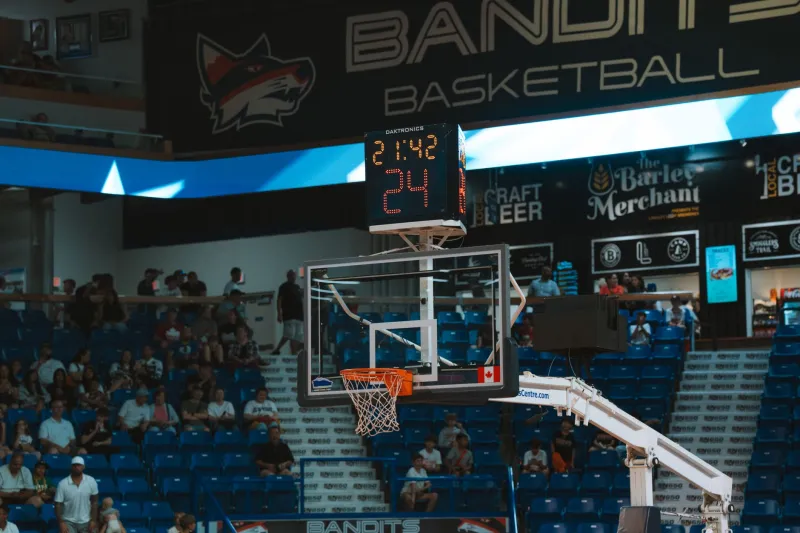
Photo by Photo by Jonas Leupe on Unsplash on Unsplash
There's a specific kind of arithmetic that happens on a Saturday in the fall now, and it has nothing to do with point spreads. It goes like this: one service for the national noon window, another for the conference game your buddy swears is on, a third you upgraded in September for a single rivalry matchup you never cancelled, and a cable login that worked last week but is currently asking you to re-authenticate for reasons known only to a server farm in another time zone.
By the time the game is on, the line has moved twice. Welcome to the two-screen tax.
The Bill Arrives Before the Bet Does
Nobody itemizes streaming costs next to their betting ledger, which is exactly why the number sneaks up on people. Stack the services you actually use during football season — the big national one, the one with the European soccer, the one that owns a slice of the college package, plus whatever you're paying for internet to make all of it work — and a committed US fan is easily looking at $40 to $70 a month from August through January.
Compare that to the vig. If you're a $50-unit bettor laying a couple of games a week, your sportsbook's cut is real but modest. Your streaming bill is not modest. It's a fixed cost with no variance, no cash-out option, and no chance of a middle. You pay it whether the favorite covers or the whole card goes sideways.
The honest way to think about it is this: the subscription isn't the cost of watching. It's the cost of participating. You can't sweat a bet on a game you can't find.
Which Game You Watch Decides Which Game You Bet
Here's the part that doesn't get said often enough. Fragmentation isn't just a wallet issue — it's an information issue, and information is the whole market.
Bettors bet what's in front of them. A primetime window on the biggest platform draws handle the way a porch light draws moths. A game buried three screens deep on a service with a clunky app draws a fraction of that attention, which means thinner markets, softer numbers, and less public money pushing lines around. That's not automatically bad — some of the sharpest players in the country live in the games nobody's watching — but it does mean the gap between "the game everyone is on" and "the game you can actually find" is now a factor in how the board gets built.
And it cuts the other way too. If you can't watch it, you won't build a read on it. You'll rely on a box score, a tweet, and a vague memory of last year's matchup. That's not handicapping. That's vibes with a decimal point.
The Second Screen Stopped Being a Scoreboard
The second screen used to be simple. RedZone, a fantasy app, maybe a group chat that got mean around 4 p.m. Eastern.
Now the second screen is the whole product for a lot of people. When finding a game requires three logins, the highlight economy wins by default — quick cuts, condensed recaps, a forty-second clip of a fourth-quarter interception that tells you absolutely everything about the result and almost nothing about how it happened. It's efficient. It's also how bettors end up overweighting one spectacular play and underweighting the sixty minutes around it.
This is the quiet trade the streaming era has made on our behalf. Fewer of us watch full games. More of us watch the shape of games. And the shape of a game is a terrible thing to price a spread against.
The Quiet Redistribution of Attention
The NFL and college football have always been television products first and betting products second, and the rights deals of the past several years have scattered those products across more apps than any reasonable person should have to manage. Soccer fans in the US know this better than anyone — the Premier League's American broadcast home requires one subscription, the cups require another, and the Champions League requires a third. The 9 a.m. ET kickoff is a beautiful thing right up until you realize you're paying three separate companies to watch it.
What that produces is a slow redistribution of attention toward whatever is easiest to access. Primetime gets more bets. Marquee brands get more bets. The games behind the extra paywall get fewer eyeballs and, often, worse prices for the casual player who wanders in without context.
The Tax Nobody Itemizes
None of this means streaming is a scam or that the leagues are doing something wrong. Fragmentation is the natural end state of a market where everyone wants a piece of the most valuable live content on earth. But bettors should be clear-eyed about the arrangement.
You are paying twice now. Once for access, once for action. And the access fee isn't a rounding error — over a full season it can run several hundred dollars, which is real money against a bankroll that has to survive variance.
So budget it like you'd budget anything else. Know what you're paying to watch. Know which games you're actually going to bet, and which ones you're paying for out of habit. And when the highlight clip rolls across your feed at 11 p.m. and your gut tells you the number tomorrow should be different, remember that the clip didn't watch the game either.
Every match, every odd, every highlight — that's the deal at 11W Sports. Just make sure the first one isn't quietly eating the other two.