The Storyline Premium: Why Revenge Games Are Priced Like Fairy Tales
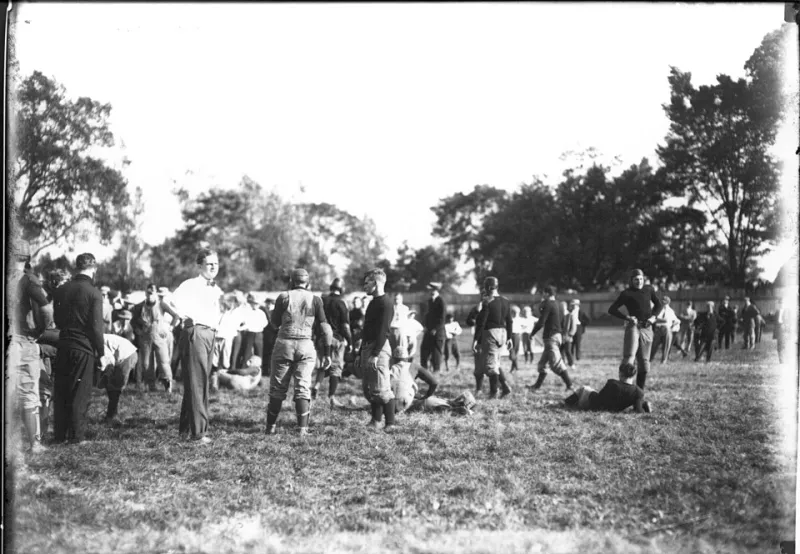
Photo: Snyder, Frank R. Flickr: Miami U. Libraries - Digital Collections, Public domain, via Wikimedia Commons
There is no official stat for wanting it more. That is a shame, because every football broadcast in America seems to have one. The traded quarterback facing his old team. The coach returning to the stadium that fired him. The linebacker who was cut in August and has been waiting for this date since. These stories are great television. They are also very easy to sell, which is exactly why bettors should handle them with care.
The story is the product
A revenge game is not a matchup. It is a marketing package wrapped around a matchup. The broadcast will show the player walking into the stadium, the crowd booing, the coach staring across the field. The graphics will mention the trade, the contract, the quote from the offseason. By kickoff, the narrative is more vivid than the depth chart. That does not mean the player will not play well. It means the story is already doing work on the line.
Public money loves a narrative. When a team is on the wrong side of a breakup, the betting public often leans toward the jilted side. If the market knows that, the line can move before the game starts. Sometimes it moves too far. That is the storyline premium: the extra half-point or full point you pay for a story that the scoreboard does not care about.
The bulletin-board economy
Locker-room bulletin-board material is a real thing, but it is not a measurable edge. Coaches use slights to motivate. Players use them to focus. But motivation is not a skill that scales evenly. A team that is already good does not become better because someone said something on a podcast. A team that is already bad does not become good because it is angry. The market understands this, which is why the line does not usually move on a quote. It moves on money. And money moves on stories.
Must-win is another phrase that gets priced like a stat. In Week 12, every team with a pulse is supposedly in a must-win game. The phrase sounds urgent, but urgency is not the same as advantage. A desperate team can play tight. A relaxed team can play loose. The line does not know the difference until the game starts. Bettors who treat must-win like a tiebreaker are usually paying for a headline, not a handicap.
What actually moves a line
Real edges are usually boring. Offensive line injuries. A quarterback playing through a shoulder issue that is not on the report. A defense that is missing its best cover corner. A team that is on a short week after a cross-country flight. Weather. Rest. Scheme. These things show up in the number because they affect the game. Revenge does not show up in the number unless bettors make it show up.
That is why the best revenge-game bets often go the other way. If the public is loading up on the jilted team, the other side may be getting a better price than the matchup deserves. That does not mean you should fade every revenge game on principle. It means you should ask whether the line is paying for emotion. If the answer is yes, the value is probably on the other side.
The emotional discount
When a narrative is strong, bettors tend to overvalue the team with the emotional edge and undervalue the team with the practical edge. That is the emotional discount. It is not a rule; it is a tendency. The best way to exploit it is not to bet every revenge game blindly. It is to compare the story to the matchup and see which one is doing the heavier lifting. If the story is louder than the injury report, you are probably paying for the story.
Three questions before you bet the grudge
First, is the line already moving? If a team opened at -3 and is now -4.5 with no meaningful injury news, the story may already be priced. Second, does the narrative actually change the matchup? A receiver who wants revenge still has to beat the guy covering him. A coach who wants revenge still has to block the other team's front. Third, what is the market telling you? If the public is heavy on one side and the line is not moving, the sportsbook may be comfortable with that side. If the line moves against the public, that is a signal.
There is nothing wrong with enjoying a revenge game. Football is better with a little drama. But betting is not fandom. The story is for the broadcast. The number is for the bettor. Keep those two things separate, and you will stop paying the storyline premium. The player may want it more. That does not mean you should pay more.