Nobody Asks If You're Still Betting. That's the Problem.

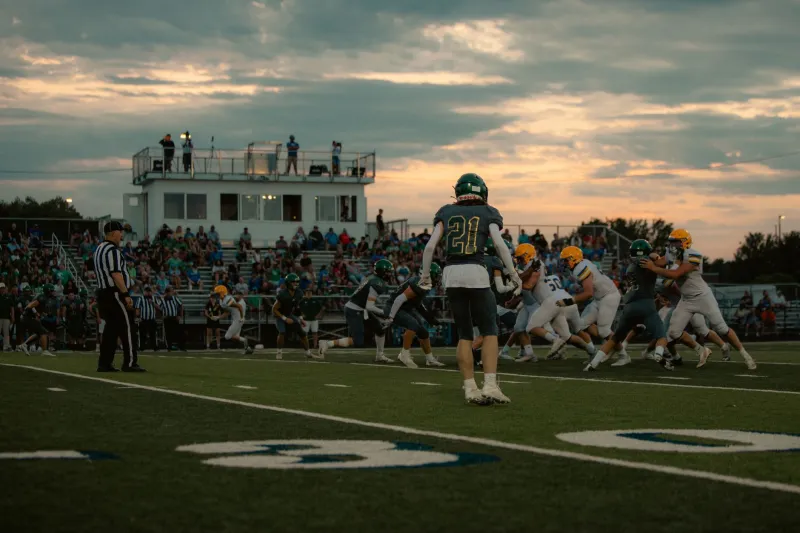
Photo: Manfred Werner / Tsui, CC BY-SA 3.0, via Wikimedia Commons
It's late on a Sunday in November, and your phone has become a tiny casino with a football game attached. The same-game parlay you built at 1 p.m. is hanging by a thread. A one-tap cash-out offer blinks at you. The live odds refresh every few seconds like a stock ticker that learned to sweat. Somewhere in the background, a streaming service is about to ask, "Are you still watching?" Your sportsbook app will not.
That's the gap worth talking about.
The Streaming Prompt Is Annoying Because It Works
Netflix, Hulu, Max—they all do it. You drift off during a procedural drama, and eventually the screen goes polite: Are you still watching? It's a small speed bump. It doesn't judge you. It just refuses to pretend that six straight hours of autoplay is normal behavior.
Sportsbook apps have borrowed plenty from streaming already. They have the slick interface, the personalized rows, the "you might also like" energy. Same-game parlays are the betting equivalent of autoplay: one click, and suddenly you're three legs deep into a script you didn't plan to write. Live odds refreshes create the same endless-scroll rhythm. Cash-out buttons turn every commercial break into a decision point.
But the apps skipped the one feature that treats you like a person instead of a retention metric.
Autoplay With a Bankroll
The modern sportsbook is very good at keeping the session alive. A same-game parlay suggestion appears before you've finished reading the first one. A boosted odds tab sits one thumb-tap away. Live betting doesn't have a natural stopping point—there's always another quarter, another inning, another match starting in a time zone you don't live in.
This isn't a conspiracy. It's product design. Streaming companies learned that friction kills engagement, so they removed it. Sportsbooks learned the same lesson and removed it faster. The result is an experience that feels less like placing a bet and more like scrolling a feed that happens to cost money.
The problem is what happens after the third hour. You're not really handicapping anymore. You're reacting. A bad beat becomes a chase. A chase becomes a same-game parlay with legs you can't name. A bad night becomes a bad month because nobody—not the app, not the screen, not the little notification—ever asked if you wanted to stop.
The Case for a Blunt Little Prompt
A sportsbook doesn't need to be your therapist. It just needs one honest speed bump: a session check that appears after a set amount of time or a set number of wagers. Something like: You've been betting for 90 minutes. Still want to keep going? With a real pause—not a tiny "X" in the corner, not a prompt that disappears if you tap anywhere on the screen.
Streaming's version works because it's unavoidable but not punitive. It doesn't lock you out. It just makes you acknowledge that time is passing. A betting app could do the same. Add a cool-off button that isn't buried three menus deep. Show a running session total instead of a single bet's stake. Let users set a hard stop before the app's own engagement engine gets a vote.
Some of this exists in patches. Deposit limits, time-out tools, reality checks—they're in the fine print of many regulated apps. But fine print is where good intentions go to die. The prompt needs to be as prominent as the cash-out button. It needs to show up when the session is long, not when the account is already empty.
Session Rules That Actually Fit Real Life
You don't have to wait for the industry to build a better mousetrap. You can build your own "are you still watching?" moment in 2026 with a few unglamorous rules.
Set a session clock before you open the app. Not a bankroll limit—a time limit. Ninety minutes is plenty for a slate. When the clock hits zero, the app closes. No negotiating with yourself during a commercial break.
Treat cash-out as a settlement, not a strategy. One-tap cash-out is designed to feel like a life raft. Sometimes it is. But if you're tapping it every 10 minutes, you're not managing a bet—you're managing anxiety. That's a sign the session has run past its usefulness.
Separate the stream from the slip. Watching a game with a bet on it is fine. Watching a game because you have a bet on it is a different habit. If the app is open during every timeout, ask yourself what you're actually doing.
Put a speed bump on same-game parlays. Build one before the game starts and leave it alone. If you're adding legs in the third quarter, you're not handicapping—you're autoplaying.
Make the last bet the last bet. Give yourself a cutoff—say, no new wagers after the fourth quarter starts, or after 11 p.m. local time. The goal isn't discipline for its own sake. It's making sure the night ends on your terms.
Every Match Needs a Credits Screen
Streaming services understand something sportsbooks mostly don't: people need an ending. A show rolls credits. A movie fades to black. A betting session, left to its own devices, just keeps refreshing.
The "Are you still watching?" prompt isn't perfect. It's a nag. But it's a nag with your interests in mind—or at least your sleep schedule. A sportsbook app could borrow that energy without becoming a scold. One prompt. One pause. One chance to say, No, I'm done for tonight.
That's not anti-betting. It's pro-paying-attention. And in a market that now runs 24/7, attention might be the most valuable thing in your bankroll.